By: Carmina Calderón Santos
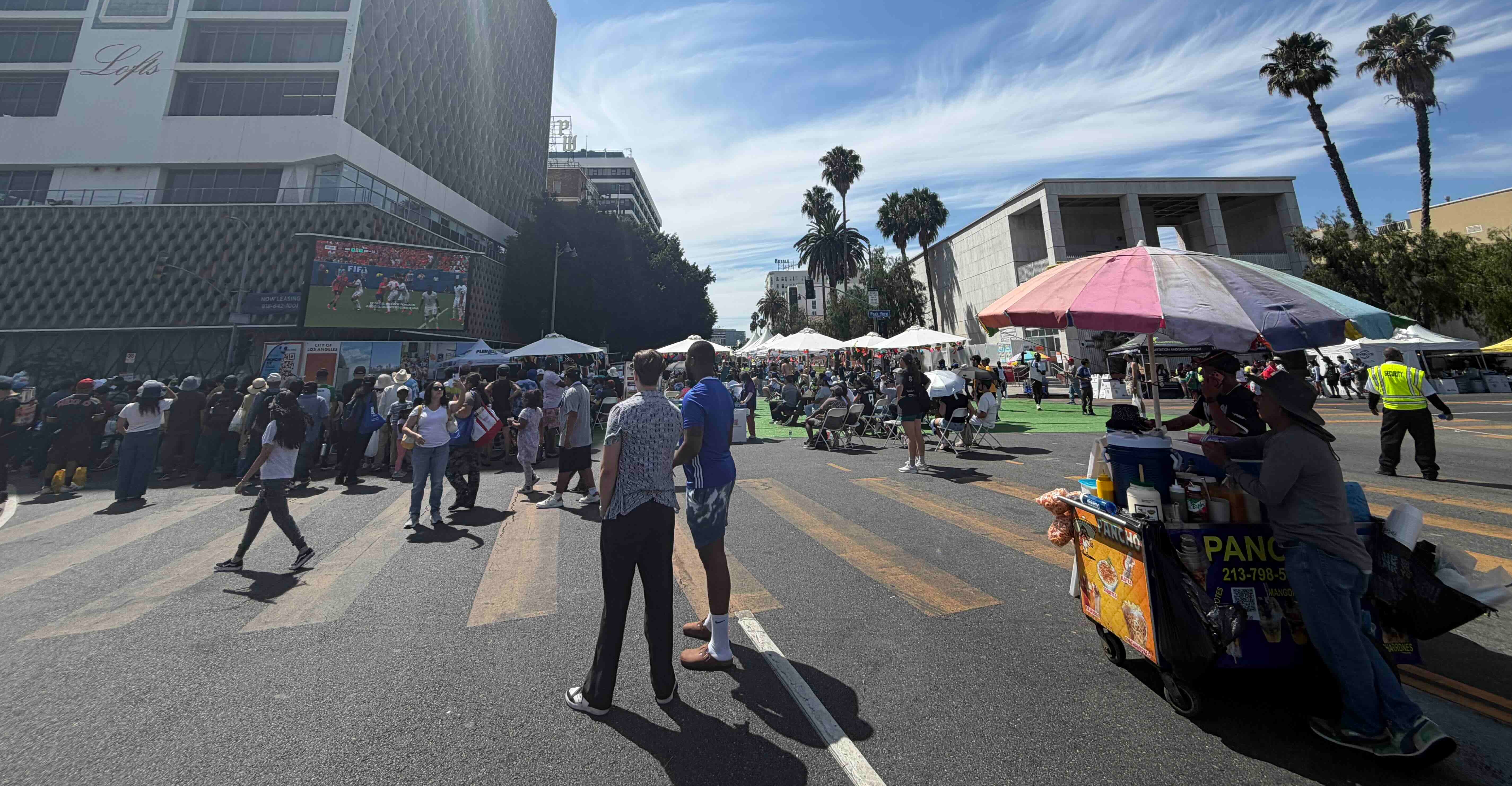
People deserve places to gather. They deserve public spaces that support connection and community, not just infrastructure that moves them from one place to another. This is something I think about when we talk about Metro. Riders are often treated like customers, numbers, or fares—but riders are our neighbors. Many of us want to have a village, but building a village also requires being a villager. It means looking out for one another, sometimes going out of our way to care for someone, and building the relationships and trust that make a community stronger. There’s a collective need and desire for places to convivir—to live with, enjoy, and share life with one another. We need spaces where we can be together without having to buy something or be a customer. This was especially apparent this summer during the Mexico vs. South Korea game at Seoul International Park in Koreatown. In a neighborhood that is already so park-starved, people transformed a public space into a place to celebrate, eat, cheer, and be together. It was joyful, and it was also political – as large numbers of people descended upon the park as game time drew near, the park became too crowded to enjoy safely. The City of LA’s lack of park space in Koreatown eventually created unsafe conditions for attendees.
In early August, I attended SAJE’s Escuelita, where we spent time learning about the history of FIFA and the corruption and exploitation that have been part of the organization’s story. It was a powerful reminder that the World Cup we see marketed to us is not the whole story. There are billions of dollars, corporate interests, and political decisions behind these games—and yet, at the center of it all are people. People who love fútbol. People who gather in the streets, parks, homes, and community spaces to watch their teams play. SAJE’s Escuelita served as a reminder that “the beautiful game” belongs to the people. In the aftermath of the World Cup, I keep thinking about what it means to bring a global mega-event to a city where so many residents are already struggling for housing, public space, affordable transportation, and a sense of belonging.
I believe our fight for transit justice is about much more than service levels or fare policy. It is about what kind of city we want to live in and who gets to shape it. In LA, transit riders already work twice as hard as anyone who drives alone to get places. Transit riders, therefore, should have a meaningful seat at the table making decisions about our transit system. As we organize against fare hikes and look for political windows to advance rider priorities, we have an opportunity to build that power. We should be fighting for a transit system that sees the whole person—not just their trip, their fare, or their destination. We should be building a city where people have places to gather, where public space belongs to the public, and where our systems help us care for one another. The World Cup may have only been here for a month, but the communities who live here will remain. Our investments should reflect that, and the beautiful game should remind us that our city belongs to the people who make it beautiful every day.
--
 Carmina Calderón Santos serves as ACT-LA's Campaigns and Outreach Manager where she works with ACT-LA members to support the coalition’s housing and transit justice campaigns. Carmina was born and raised in East Hollywood and is of Salvadoran-Filipino descent. It is through her lived experience as a transit-dependent youth and living with housing insecurity she was able to understand the connection between access to dignified housing and mobility as a human right.
